
There is nothing quite like a West Michigan summer. From the blue waters of Lake Michigan to the bustling outdoor markets in downtown Grand Rapids, we wait all winter for this warmth. However, as any local knows, that heat often comes with a side of thick humidity. When the dog days of July and August hit, our air conditioners start humming, and our energy meters start spinning.
At Belasco Electric, we’ve served the Grand Rapids and Greater West Michigan area for years. We’ve seen how seasonal spikes in electricity usage can strain both your home’s electrical system and your wallet. Between rising utility rates and the increased demand on the grid, finding ways to stay cool without breaking the bank is a top priority for our neighbors.
As your local Grand Rapids electrician, we want to share the most effective, data-driven ways to optimize your home for the summer heat.
8 Summer Energy Saving Tips from Your Grand Rapids Electrician
Implementing just a few of these changes can lead to a noticeable decrease in your monthly bill. When applied together, they transform your home into a high-efficiency sanctuary.
1. Upgrade to a Smart Thermostat
Data from the Department of Energy suggests that homeowners can save about 10% a year on heating and cooling by simply turning their thermostat back 7°F – 10°F from its normal setting for eight hours a day. A smart thermostat (like a Nest or Ecobee) automates this.
In Grand Rapids, the temperature can drop 15 degrees once the lake breeze hits in the evening. Here, you need a smart thermostat that can adjust in real-time, ensuring you aren’t cooling unnecessarily.
2. Reverse Your Ceiling Fans
Many people forget that ceiling fans have a summer and winter mode. In the summer, your fan blades should rotate counter-clockwise. This creates a downdraft that provides a wind chill effect.
While fans don’t actually lower the room’s temperature, they allow you to raise the thermostat by about 4°F without losing comfort. This small switch can reduce energy costs by nearly 14%.
3. Maintain Your AC’s Electrical Connections
Your Air Conditioner is the biggest energy hog in your home. A clean electrical connection is vital. If the capacitor is failing or the wiring to the outdoor condenser is frayed, the motor has to work twice as hard to start up, drawing massive amounts of inrush current. It is recommended to have an electrician check your dedicated AC circuit to ensure the unit runs at peak efficiency.
4. Switch to LED Lighting
If you are still using incandescent bulbs, you aren’t just wasting electricity on light and paying to heat your home. Incandescent bulbs release 90% of their energy as heat. In a house with 30 bulbs, that’s like running a small space heater all summer. Switching to LEDs reduces energy use by 75% and keeps your living spaces cooler.
5. Seal Phantom Energy Loads
Phantom or Vampire power refers to electronics that draw energy even when turned off. Think of your coffee maker with the digital clock, your idle Xbox, or your laptop charger. In the summer, when the grid is already stressed, these devices contribute to about 10% of a home’s energy use. Use smart power strips that cut power to peripherals when the main device is off.
6. Use Major Appliances During “Off-Peak” Hours
Utility companies in West Michigan often have Time of Use (TOU) rates.
- Peak Hours (2:00 PM – 7:00 PM, Mon-Fri): This is when electricity is most expensive (averaging around $0.245 per kWh).
- Off-Peak Hours (After 7:00 PM & Weekends): Rates drop significantly (to approximately $0.197 per kWh).
- Super Off-Peak / Overnight Savers (11:00 PM – 6:00 AM): For those on specific plans, rates can plummet even further. Some Michigan programs even offer specialized EV rates as low as $0.08 to $0.10 per kWh for overnight charging.
Running your dishwasher, clothes dryer, or electric oven at 2:00 PM is the most expensive time to do it. Aim to run these high-draw appliances after 8:00 PM or early in the morning. In case you have an EV, start charging overnight.
This reduces the heat load during the hottest part of the day, meaning you can run your AC freely without worrying about the bill.
7. Install Outdoor Motion Sensors and Solar Lighting
With the sun staying up until nearly 10:00 PM in June, we often forget to turn off porch and security lights. Installing motion sensors or photocells ensures your lights only draw power when it’s actually dark or when someone is moving.
Pairing these upgrades with solar-powered outdoor lighting can reduce electricity usage even further, since the fixtures charge during the day using solar energy and operate automatically at night. This is a simple energy-efficient upgrade that often pays for itself within a single season.
8. Consider a Whole-House Fan or Attic Ventilator
Hot air rises and gets trapped in your attic. If your attic reaches 140°F, that heat radiates down through your ceiling. A professionally installed attic fan clears that hot air out, allowing your AC to cool the living space much faster. It’s an active cooling solution that uses a fraction of the power of a compressor.
Safe DIY Energy Checks You Can Do This Summer
You don’t always need a tool belt to make a difference. Here are a few things you can do safely:
- The Hand Test on Outlets: Walk around your home and place the back of your hand on outlets. If an outlet feels warm even when nothing is plugged in, you have an electrical leak or a loose connection that is wasting energy (and posing a fire risk).
- Air Filter Audit: Check your HVAC filter every 30 days. A clogged filter makes the blower motor work harder, increasing your electric bill by 5% to 15%.
- Window Shielding: On south and west-facing windows, keep the blinds closed during the day. This passive cooling can reduce solar heat gain by up to 77%.
- Safety Warning: Never attempt to open your electrical panel or repair frayed wiring yourself. If you see sparks, hear a buzzing sound, or smell burnt plastic, call Belasco Electric immediately. DIY electrical work is the leading cause of residential fires in Michigan.
Why These Electrical Tips Work Well in West Michigan?
West Michigan has a unique climate profile. We have high humidity because of our proximity to Lake Michigan, which makes 85°F feel like 95°F. This felt heat causes us to run AC units longer than folks in drier climates.
Furthermore, many Grand Rapids homes (especially in neighborhoods like Heritage Hill or East Grand Rapids) are older. These homes often have uninsulated wall cavities or older wiring that creates more resistance. By focusing on electrical efficiency, you are compensating for the structural challenges of older Michigan architecture.
When to Call a Professional Grand Rapids Electrician?
While changing a lightbulb is easy, some energy-saving upgrades require a licensed pro to ensure they are safe and up to code.
- Panel Upgrades: If your electrical panel is more than 30 years old (or you have a Federal Pacific or Zinsco brand), it may not be able to handle the load of a modern high-efficiency AC. A panel upgrade to 200 amps is often the foundation of a green home.
- Dedicated Circuits: If your AC or pool pump is tripping the breaker, it’s drawing too much current. We can install dedicated lines that ensure these heavy-duty motors run safely.
- EV Charger Installation: Thinking about switching to an Electric Vehicle this summer? Install a proper Level 2 charging to avoid overloading.
- Surge Protection: Summer storms in West Michigan are famous for lightning. A whole-home surge protector saves your energy-efficient appliances from being fried in a split second.
The Long-Term Benefits of Summer Energy Upgrades
Investing in your electrical system isn’t just about the next three months.
- Increased Home Value: The Grand Rapids real estate market is increasingly driven by “green” buyers. In 2026, a home’s Energy Score is often as important as its square footage. Studies show that energy-efficient homes sell for an average of 3% to 5% more than traditional homes.
- Extended Appliance Life: When your electrical system is outdated or taxed, your appliances suffer. Low voltage or dirty power causes motors in your refrigerator, air conditioner, and washing machine to run hotter and work harder. By upgrading to dedicated circuits and ensuring stable voltage, you can extend the life of your major appliances by 3 to 5 years.
- Protection Against Rising Utility Rates: Energy prices in Michigan have historically trended upward. By installing smart home technology and high-efficiency lighting now, you are essentially locking in a lower consumption rate.
- Enhanced Safety: Summer in West Michigan brings heat waves and sudden Lake Michigan thunderstorms. With whole-home surge protection, you can save sensitive electronics from lightning strikes and grid surges. Also, modern breakers (AFCI/GFCI) and refreshed wiring significantly reduce the risk of electrical fires, which are most common during high-load summer months.
- Future-Proofing: Whether it’s an electric vehicle (EV), a heat pump, or an induction cooktop, these technologies require a robust electrical backbone. Making these upgrades during the summer ensures your home is ready for whatever new technology you bring home tomorrow.
- Environmental Impact: Reducing your draw on the West Michigan grid helps lower the overall carbon footprint of our community.
Frequently Asked Questions About Summer Energy Savings
Q: Does leaving a ceiling fan on in an empty room save energy?
A: No. Fans cool people, not rooms. If you aren’t in the room, turn the fan off to save electricity.
Q: Are LED bulbs really worth the higher price?
A: Yes. An LED bulb uses about 8 watts to produce the same light as a 60-watt incandescent, and it lasts 25 times longer.
Q: How much can I save by turning off my AC when I’m at work?
A: Using a smart thermostat to let the house warm up while you’re away can save you roughly $180 per year.
Q: Can old wiring cause a high electric bill?
A: Absolutely. Damaged or undersized wiring creates “resistance,” which generates heat and wastes electricity before it even reaches your appliances.
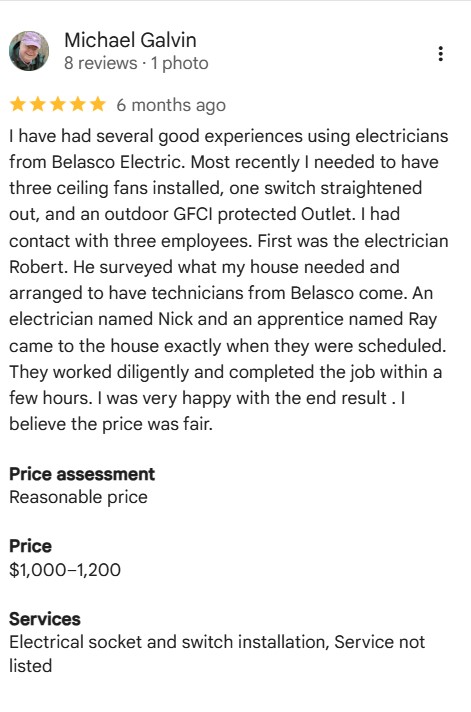
Ready to Lower Your Energy Bills This Summer?
At Belasco Electric, we believe that a safe home is an efficient home. If your electric bills are skyrocketing or you’re worried your old Grand Rapids home isn’t handling the summer heat safely, we are here to help.
From comprehensive energy audits to panel upgrades and smart home installations, our team of expert electricians is dedicated to keeping West Michigan cool, safe, and efficient.
Don’t let the summer heat burn through your budget. Reach out to Belasco Electric today!
Need help deciding which electrical upgrades make sense for your home? Call Belasco Electric at 231-722-3997 or request a quick estimate online.
Coming from Grand Rapids? Belasco Electric is located at 1391 Peck St, Muskegon, MI 49441, roughly 40–41 miles by road from Grand Rapids, typically via I-96 W toward Muskegon. Get directions to Belasco Electric.
Good to Read
What Is a C Wire on a Thermostat? Talk to an Electrician!
Benefits of LED Retrofit Lighting: Home and Commercial
Powering the Future: Understanding EV Charger Installation with Belasco Electric
When Should I Upgrade My Electrical Service?
Disclaimer:
All content on this blog is for general informational and educational purposes only and is provided “as is” without warranty. It does not constitute financial, legal, tax, investment, or any other professional advice.
The author and website owner disclaim all liability for any loss or damage arising from its use. Readers should conduct their own research and consult qualified professionals before making any decisions.


